lcc
lcc — Local Context Compiler
Shrink what you send to the model. Keep every byte you didn’t cut. Get a receipt.
lcc cleans duplicates and boilerplate, selects context for an explicit objective and writes a
JSON report of what was kept, trimmed or dropped, and why. Selected spans stay verbatim, the
default path runs offline with no API key, and the code is MIT-licensed.
| Measured on | Before → after | What was kept |
|---|---|---|
| A real Claude Code session (192 messages) | 55,411 → 18,761 tokens (−66.1%) | all 42 user/assistant texts, byte for byte |
| A real 337-message agent session | 199,717 → 36,645 tokens (−81.7%) | all 58 user/assistant texts, byte for byte |
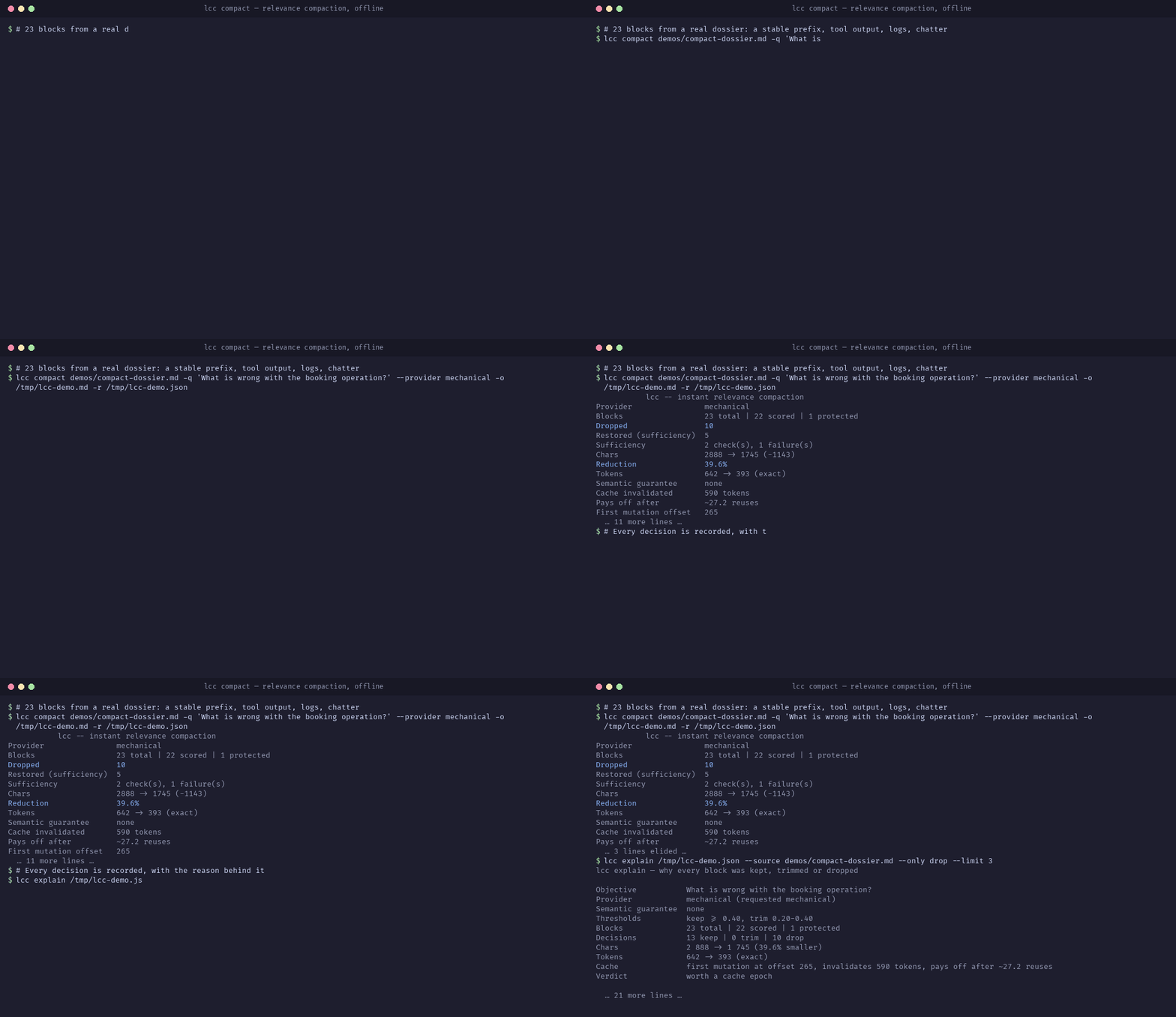
The demo dossier, offline mechanical provider |
642 → 393 tokens (−39.6%) | 13 of 23 blocks, with a reason for every drop |
Session rows: tool-call mode with the Jev judge. Sources and limits: real-session measurements.
Install
pip install "local-context-compiler[tiktoken]"
lcc compact notes.md -q "what is wrong with the booking flow?" --provider mechanical -o compacted.md -r report.json
lcc explain report.json --source notes.md
MCP (Claude Code, Cursor, Claude Desktop):
{"mcpServers": {"lcc": {"command": "lcc", "args": ["mcp"]}}}
Guides
- Quickstart: every command, offline
- Claude Code plugin: verbatim
/compactinstead of a lossy summary - Tool-call mode: compacting agent transcripts
- Real-session benchmarks: what each mode removed on real agent sessions
- MCP server: the six tools
- ChatGPT plugin and privacy policy
- Architecture and roadmap
Source, issues and releases: github.com/lucasmartins-ai/lcc. Maintained by LookADev.